
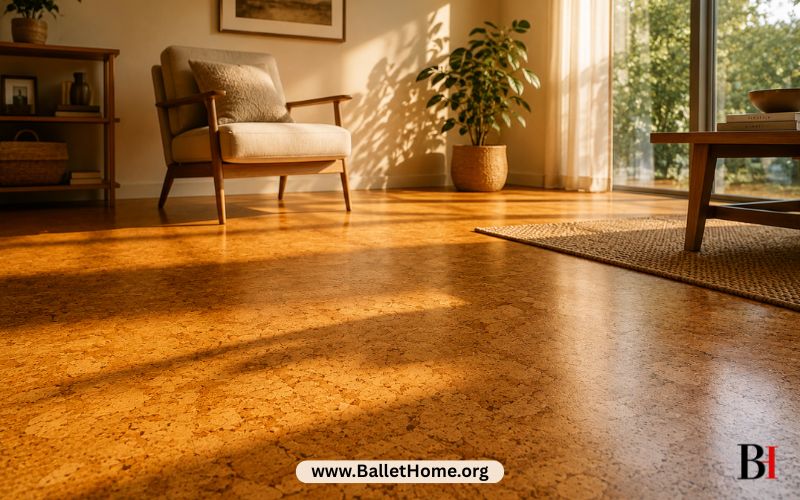
How to clean cork flooring comes down to understanding what this natural material actually needs. Cork is a soft, porous surface finished with wax or polyurethane, so it behaves differently from tile, laminate, or hardwood when it comes to everyday care. Get the routine right, and it stays comfortable underfoot and holds up for years. Get it wrong, using standing water, harsh cleaners, or a steam mop, and that finish can warp or dull fast. The good news is that cork flooring is genuinely easy to maintain once you know the basics.
How to Clean Cork Flooring Step by Step
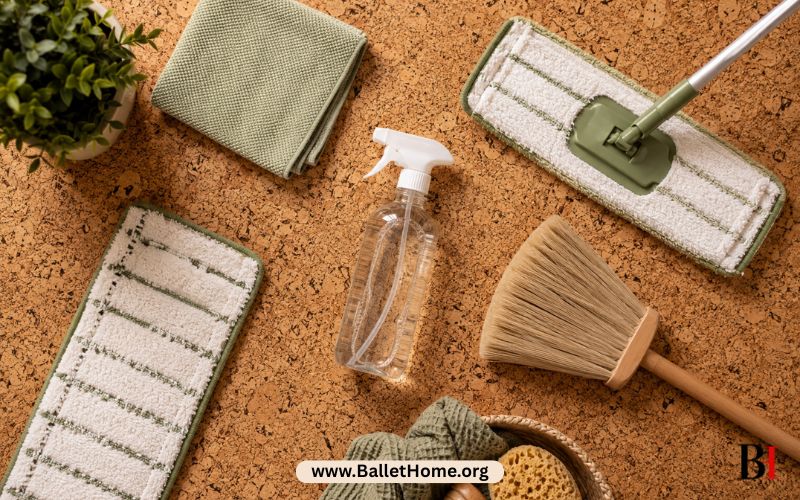
Learning how to clean cork flooring step by step starts with keeping loose dirt off the surface before it has a chance to scratch the finish. Sweep or vacuum first, using a soft brush attachment rather than a beater bar, which can dull or gouge the sealant over time.
Next, dampen a microfiber mop with clean water or a diluted pH-neutral cleaner, and wring it out until it’s barely moist. Never wet mop cork, since standing water can seep into the seams between planks or tiles and cause swelling underneath the finish.
Work in small sections, mopping with the grain rather than in circles, and go back over each area with a dry towel right after. This step matters more than people expect, since leftover moisture sitting on cork for even a few minutes can start to dull the sealant.
What Is Cork Flooring Made Of?
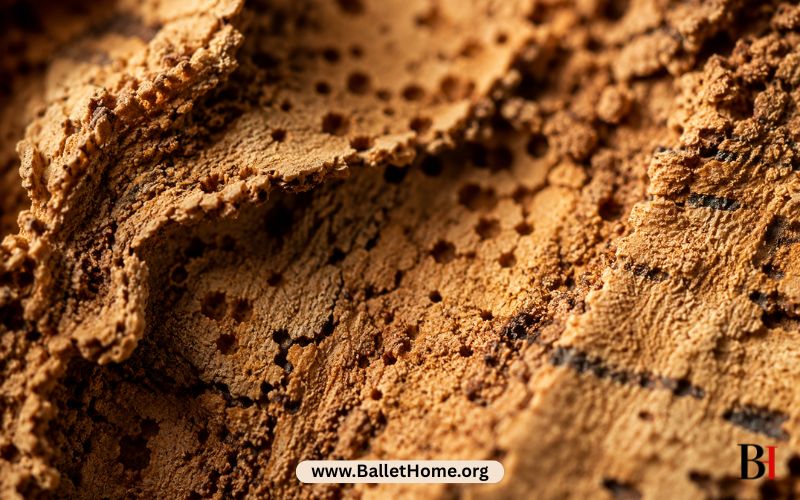
The cork oak tree’s bark makes up cork flooring, and harvesters strip it without cutting down the tree, which makes it a renewable flooring option. Manufacturers compress that bark into tiles or planks, then finish it with either a wax coating or a polyurethane sealant. This finish is what actually touches your mop and cleaner day to day, not the raw cork underneath.
Cork also has a naturally cellular structure, similar to a sponge, which gives it that soft, cushioned feel underfoot. That same structure makes it more absorbent than hardwood if the sealant ever wears through, so moisture control matters more here than with other hard flooring.
On the upside, cork resists dust, insulates against sound and cold, and holds up well in living rooms and bedrooms. Knowing this makes how to clean cork flooring far more intuitive, since every rule ahead traces back to protecting this finish.
Best Cleaner for Cork Floors
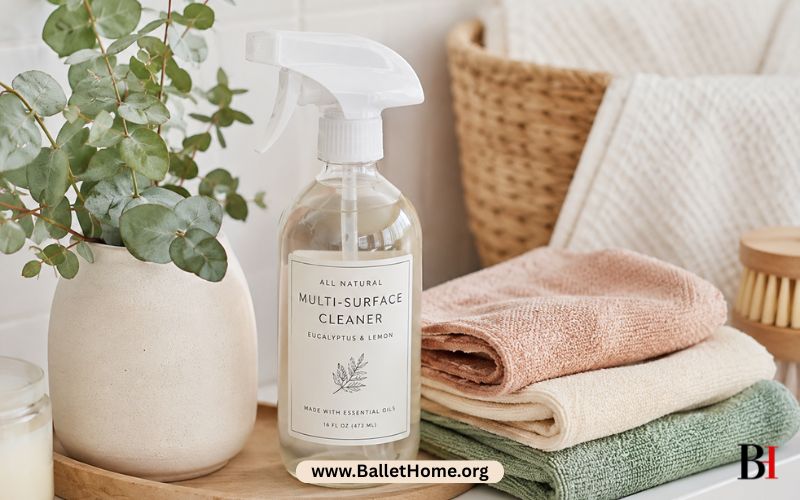
Choosing the right product is one of the most important parts of how to clean cork flooring correctly. The safest choice is a pH-neutral cleaner built for sealed hard floors, or a few drops of mild dish soap mixed into warm water. Products like Bona’s hardwood floor cleaner work well on cork too, since both surfaces share a similar finish and the same sensitivity to harsh chemicals.
If you’d rather clean cork floors naturally, a very light soap-and-water solution is really the simplest route. Some homeowners ask about using vinegar, and while a heavily diluted mix can work occasionally on polyurethane-sealed cork, vinegar’s acidity will gradually dull a wax finish with repeated use, so it’s not a cleaner to reach for regularly.
Avoid anything oil-based, wax-based, ammonia-based, or abrasive. These can either build up a cloudy residue on the surface or strip the finish faster than normal wear would.
Can You Steam Clean Cork Floors?
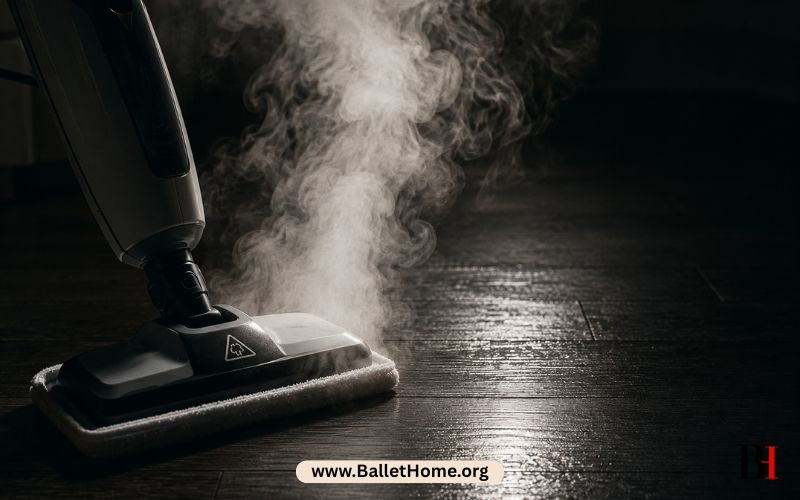
No. Steam mops are one of the fastest ways to damage cork flooring, even though brands market them as safe for most hard floors. The combination of heat and moisture pushes past the sealant and into the cork’s porous structure underneath, which can cause bubbling, warping, or the finish lifting away from the surface entirely.
This kind of damage often doesn’t show up right away. It can take repeated steam sessions before planks start to visibly swell or separate at the seams, by which point the damage has already happened and usually requires refinishing or replacing sections of the floor.
Stick to a barely damp mop instead. It cleans just as effectively for daily dirt and spills without introducing the heat and saturation that steam cleaners rely on. Some cork owners assume any hard-floor-rated steam mop is safe by default, but manufacturers rarely test these products on cork specifically, so it’s best to treat steam cleaning as off-limits regardless of what the packaging claims.
How to Seal Cork Flooring
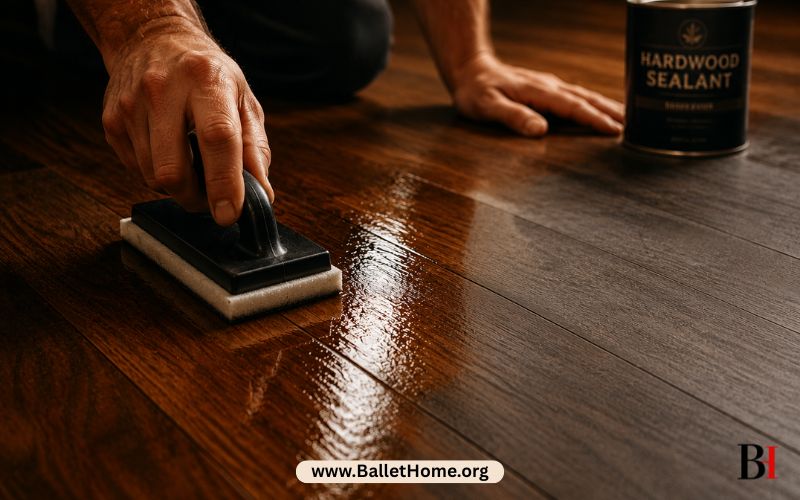
Sealing is what actually protects cork from water and everyday wear, so it’s worth treating as routine maintenance rather than a one-time task. Most cork floors need resealing every one to three years, depending on foot traffic and whether the finish is wax or polyurethane.
Before resealing, clean the floor thoroughly and let it dry completely, since sealing over trapped moisture or dust will trap both underneath the new coat. Apply a thin, even layer with a clean applicator, working in the direction of the planks, and allow it to cure fully before walking on it or replacing furniture.
]Sealing a floor properly helps it resist spills, stains, and scuffs far better than one that’s overdue for resealing, and it’s the single biggest factor in how long the flooring lasts overall. Skipping resealing doesn’t cause immediate damage, but it slowly leaves the surface more exposed to everyday wear until small scuffs and moisture spots start turning into real problems.
Cork Flooring Maintenance Tips
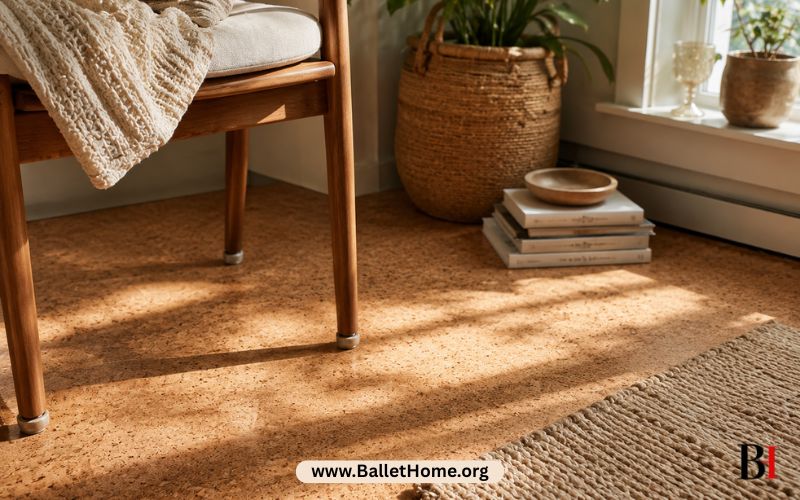
Beyond regular cleaning, a few habits go a long way toward protecting cork over time. Use felt pads under furniture legs, place walk-off mats at entryways, and add rugs in high-traffic areas to reduce direct wear on the finish.
Keep indoor humidity relatively stable, since cork can expand or contract with major swings in moisture, and direct sunlight over long periods can fade the color unevenly, so rotating rugs or using blinds during peak sun hours helps protect it.
Wipe up spills immediately rather than letting them sit, and avoid dragging heavy furniture across the floor without protection. Small consistent habits like these do more for cork flooring maintenance than any single deep clean, and they pair well with the rest of your home cleaning routine, making how to clean cork flooring on a day-to-day basis much easier over the years you own it.
Final Thoughts
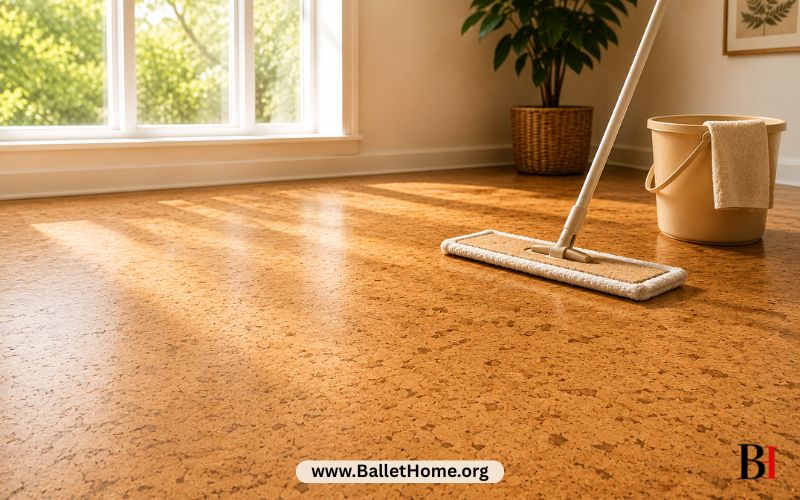
Once you understand what cork actually needs, how to clean cork flooring stops feeling complicated. Regular sweeping, a barely damp mop, the right cleaner, and periodic resealing cover almost everything. Skip the steam mop, keep standing water off the surface, and cork will stay comfortable, warm, and good-looking for a long time.
FAQ
These are the questions cork flooring owners ask most often, covering everything from steam cleaning to how long a well maintained floor actually lasts.
Can you steam clean cork floors?
No. Steam mops push heat and moisture past the sealant and into the cork underneath, which can cause warping, bubbling, or the finish lifting over time.
Can you use vinegar on cork floors?
Only in a heavily diluted mix, and only occasionally. Regular use will dull a wax finish over time, so it’s not recommended as a routine cleaner.
Is cork flooring easy to maintain?
Yes. With regular sweeping, damp mopping, and resealing every one to three years, cork flooring holds up well with minimal effort.
What is the best way to clean cork flooring?
The best approach to how to clean cork flooring is a soft-bristle sweep or vacuum, followed by a barely damp mop with a pH-neutral cleaner, dried immediately after.
How long does cork flooring last?
A well-maintained cork floor with proper sealing and cleaning habits can last 25 years or more, though the surface finish may need periodic refreshing sooner.
How often should you clean cork floors?
Sweep or vacuum a few times a week depending on foot traffic, and damp mop every one to two weeks, or sooner if spills happen.