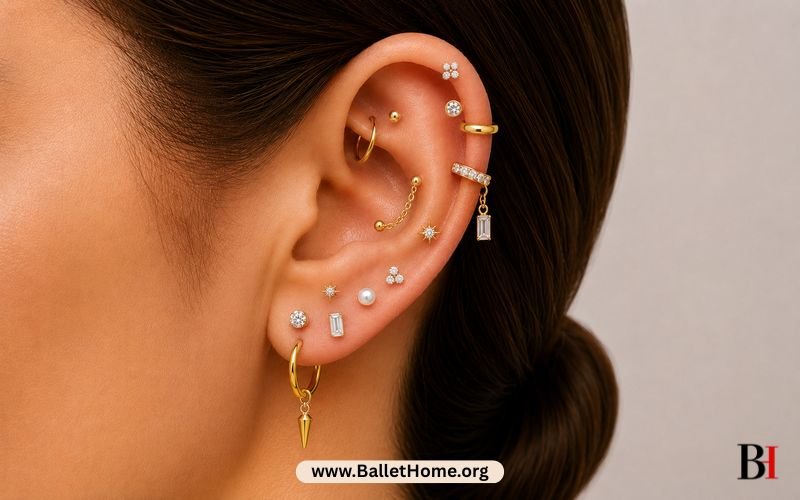
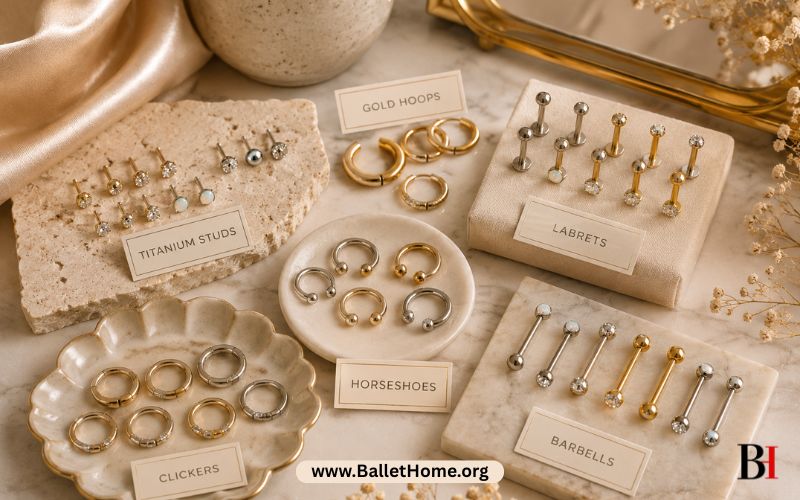
Choosing the right jewelry for your ear piercing matters just as much as choosing the right placement in the first place. Best ear piercing jewelry is not one universal choice, it depends on placement, healing, and the look you want. A stud that works beautifully on a lobe can feel completely wrong on a tragus or a daith. Many women pick jewelry based on style alone and end up dealing with irritation or a piece that simply does not fit the space correctly. This guide walks through the best jewelry choice for every major piercing type, the safest materials for healing and everyday wear, and the small mistakes that cause the most problems down the line. Whether you are planning your first lobe piercing or building out a curated cartilage stack, the right jewelry choice protects your ear and elevates your look at the same time.
Best Ear Piercing Jewelry by Type
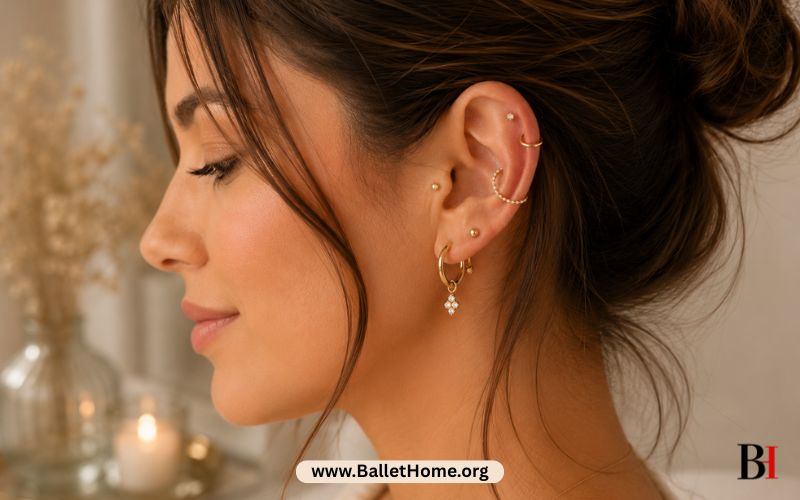
Every placement on the ear comes with its own shape, angle, and healing pattern, which means the best ear piercing jewelry for one spot can feel completely wrong in another. The six placements below cover the most popular choices, from the simple and forgiving lobe to the more particular cartilage spots like daith and rook. Each one includes the safest jewelry style to start with, typical sizing, and what to look for once the piercing is fully healed.
Lobe Piercing Jewelry
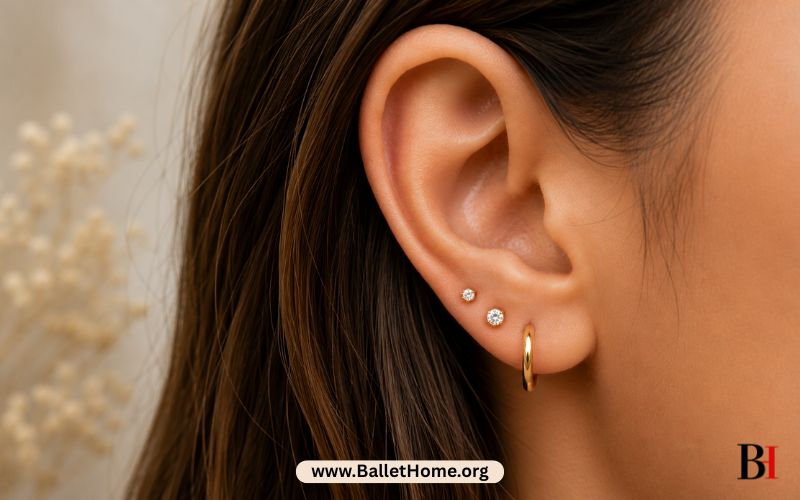
Lobe piercing jewelry is the most forgiving of any placement on the ear and welcomes nearly any style you want to try. Flat back studs work beautifully here since they sit flush and stay comfortable through long days without catching on anything. Huggie hoops are a popular next step once your lobe has fully healed, usually around six to eight weeks in. Multiple lobe piercings open the door to stacking studs and small hoops together for a layered look that builds naturally over time. Most standard lobe piercings use a 20G or 18G post, so check with your piercer before buying ear piercing jewelry on your own. Stick with implant grade titanium or solid gold for your first piece, then experiment freely with sterling silver or fashion pieces once the piercing has fully healed.
Helix Piercing Jewelry
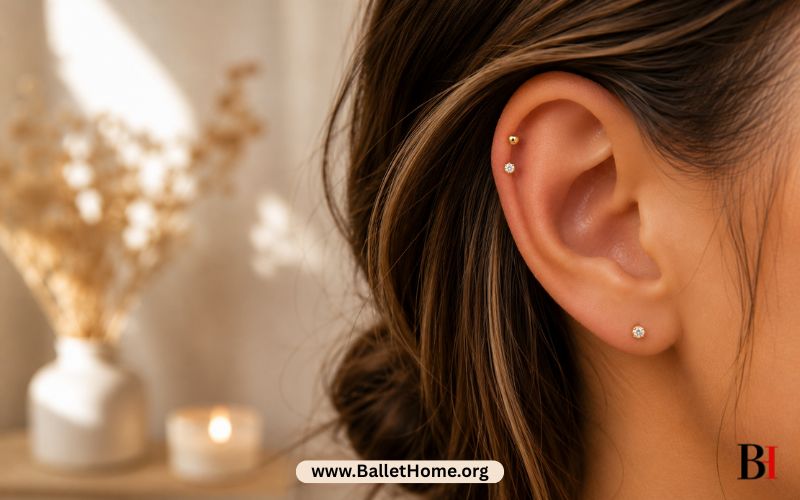
Helix piercing jewelry needs to account for more swelling than a lobe piercing typically experiences in the early healing weeks. Flat back studs with a slightly longer post, usually around 8mm, work best at first since they sit flush without pressing into the swelling as it goes down. Small hoops and curved barbells become a great option once the area has healed completely, which typically takes three to six months for cartilage. Many women choose a double helix for a stacked effect, which pairs especially well with delicate stud designs sitting close together. A low profile piece always heals more comfortably than something bulky that catches on hair, hats, or pillows during sleep. Implant grade titanium remains the safest material choice while this area is still healing.
Tragus Piercing Jewelry
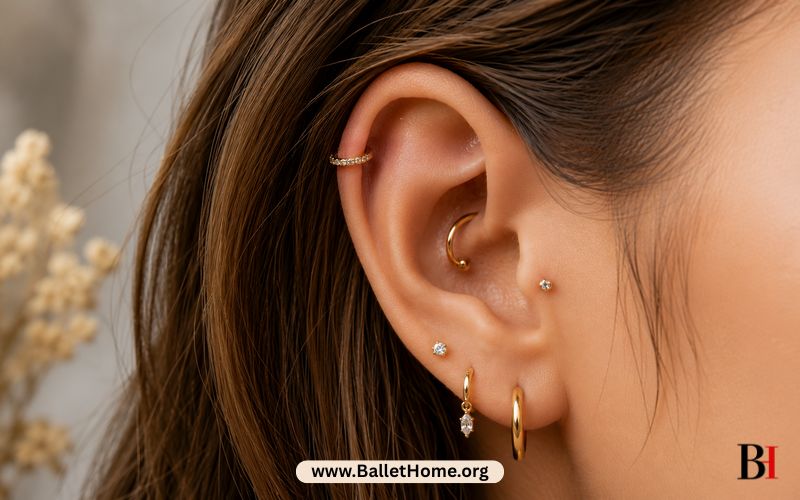
Tragus piercing jewelry has to work within one of the tightest spots on the entire ear, right in front of the ear canal. Flat back studs are the safest and most comfortable starting choice for this sensitive area, typically using a 16G post around 6mm to 8mm long. Tiny gemstone or opal accents add detail without overwhelming the small surface area available here. Hoops can be worn once the piercing has fully healed and the swelling has gone down, which usually takes three to six months. Because the tragus sits so close to the canal, choosing a piece with a low profile flat back matters more here than almost anywhere else on the ear, since anything that sticks out can press uncomfortably against the inside of your ear while sleeping.
Daith Piercing Jewelry
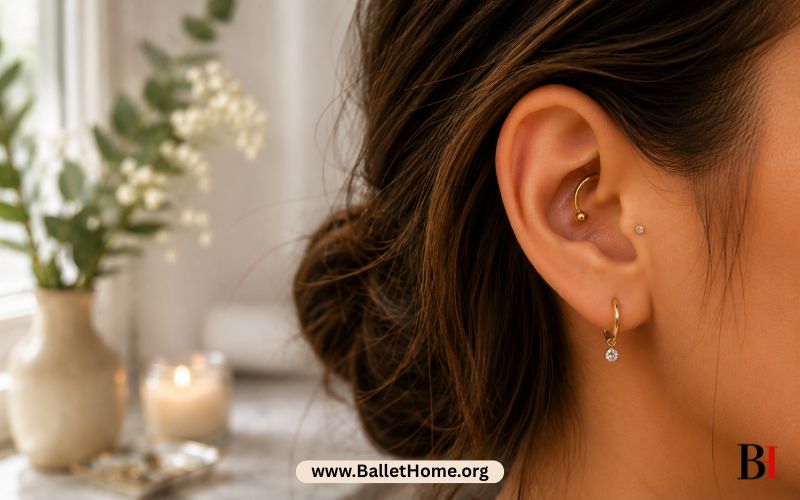
Daith piercing jewelry has to navigate one of the more difficult angles on the ear, tucked into the innermost cartilage fold. Curved barbells and small seamless hoops are the standard choice since they follow the natural curve of this fold instead of fighting against it. Clicker hoops have become especially popular for daith piercings because the hinge closure makes insertion far easier than threading a traditional ring through such a tight angle. Most daith piercings use a 16G post with hoop diameters around 8mm to 10mm once healed. This is a more committed placement with a longer healing time, often six months or more, so stick with implant grade titanium or niobium until the area has fully settled.
Rook Piercing Jewelry
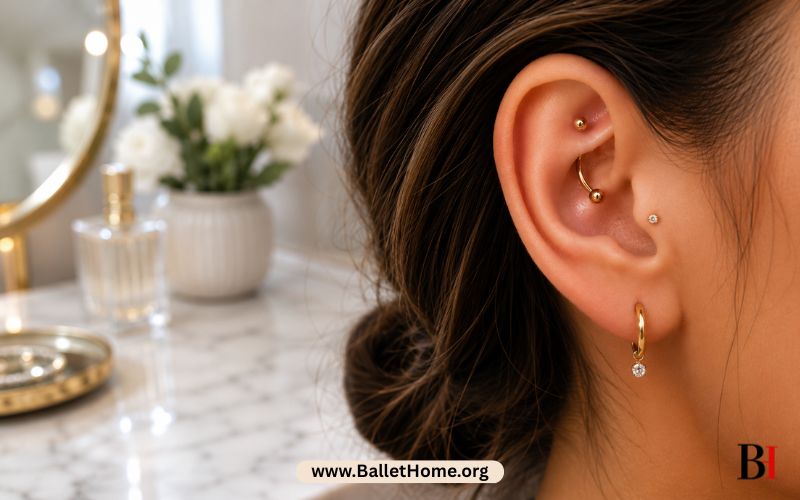
Rook piercing jewelry sits in the inner ridge of the ear, an area with less surface space than most other cartilage placements. Curved barbells are by far the most common choice since they match the natural angle of this fold without putting pressure on either side. Small hoops can work here too, but only on a fully healed rook, since the angle makes insertion tricky while swelling is still present. A 16G post is standard, and many piercers recommend starting with a slightly longer bar to allow room for the initial swelling to go down. Because the rook is less common than helix or tragus, it pairs well with simple, understated jewelry that lets the unique placement itself stand out.
Conch Piercing Jewelry
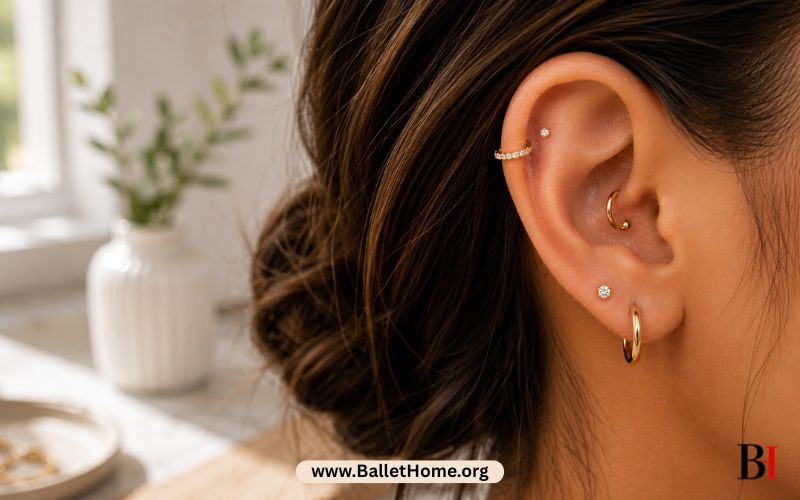
Conch piercing jewelry benefits from the wide, flat surface this placement offers, which is more space than most other cartilage piercings provide. Both studs and hoops work well here, making it one of the more flexible cartilage placements once healed. A simple ring through the conch creates a bold visual effect on its own without needing any additional piercings nearby. Many women pair a conch hoop with lobe and helix piercings already in place to build a layered look across the whole ear. Standard sizing runs around 16G with hoop diameters between 8mm and 12mm depending on ear anatomy. Healing typically takes four to six months, so implant grade titanium or solid gold should be your starting material of choice.
Titanium vs Surgical Steel vs Gold for Ear Piercings
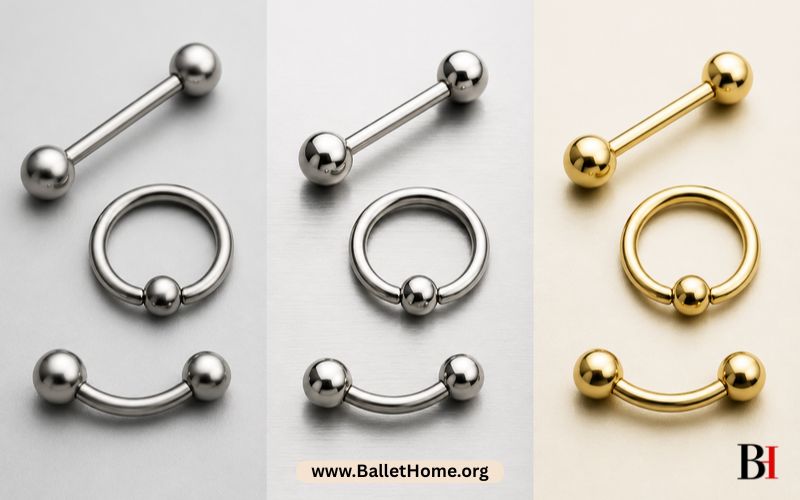
Choosing the right material matters just as much as choosing the right ear piercing jewelry style, especially while your piercing is healing. Implant grade titanium is the safest choice for new piercings because it contains zero nickel, which is why most professional piercers recommend it over surgical steel for fresh holes. Surgical steel, often called 316L, usually contains some nickel, and that small amount can still irritate sensitive skin while the piercing is still healing. If you have ever reacted to cheap jewelry before, titanium is the safer place to start. The good news is that surgical steel becomes a great option later, once your piercing has fully healed and the skin is no longer sensitive. Gold is another solid choice, and anything 14K or higher is considered safe and gentle for most ears. As a simple rule, start with titanium or high karat gold, and save surgical steel for after healing.
When Can You Change Your Earring After Healing
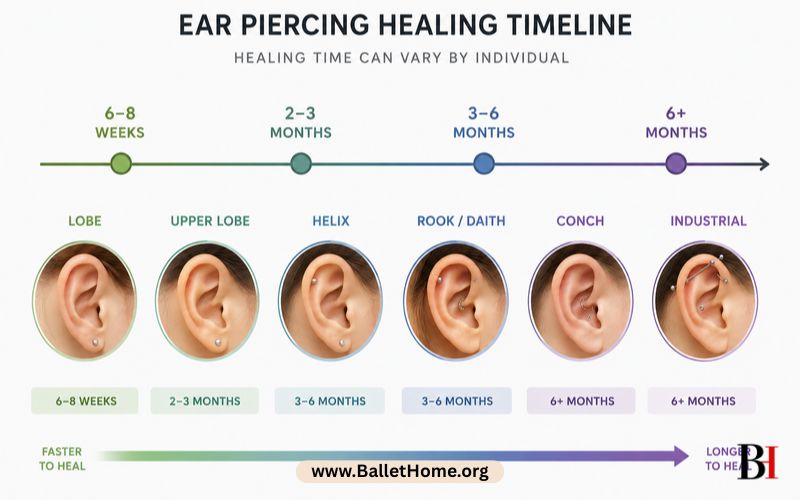
The honest answer is that it depends entirely on which piercing you have, since lobes and cartilage heal at very different speeds. Most piercers recommend waiting for complete healing before changing jewelry, and that healing window can range anywhere from six weeks to twelve months depending on the placement. Lobes are usually ready first, typically within six to eight weeks, while cartilage spots like helix, tragus, daith, rook, and conch all need several months longer. Changing your jewelry too early is one of the most common reasons piercings get irritated or end up closing back up. A simple rule worth following: if you can still see any redness, feel soreness, or notice the area still warm to the touch, it is not ready yet. When in doubt, ask your piercer to check the piercing before you swap anything out yourself.
Common Mistakes When Choosing Ear Piercing Jewelry
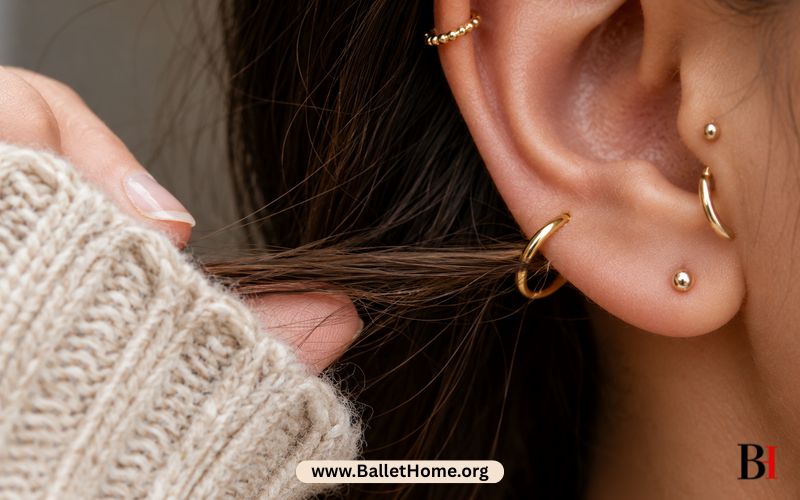
One of the biggest mistakes when choosing ear piercing jewelry is picking it based purely on looks without checking the material first. Gold-plated jewelry should be avoided for new piercings since the plating can wear away and expose a base metal that may contain nickel or other irritants. Another common mistake is picking hoops or dangle earrings for a fresh piercing. Hoop and dangle earrings can easily catch on clothes and hair, and they also move around inside the piercing channel, which slows healing and can cause irritation. Conch piercings are a frequent example of this mistake, since a ring in a new conch piercing has a high chance of moving and catching, making a barbell the safer starting choice. Getting the gauge wrong is another issue worth watching for, since the right gauge size matters because it determines how well the jewelry actually fits the piercing. Finally, many people simply swap jewelry out too soon. Waiting for full healing, even when the piercing looks fine on the surface, protects you from setbacks that take far longer to fix than the wait itself.
Frequently Asked Questions
What is the best metal for a new ear piercing?
Implant grade titanium or high karat gold, both 14K and above, are the safest choices since they contain no nickel and rarely cause reactions.
Can I wear hoops in a fresh piercing?
It is best to avoid hoops at first since they can catch on hair and clothing and move around inside the healing channel. Switch to hoops once the piercing is fully healed.
How do I know if my piercing is fully healed?
Look for no redness, no soreness, and no warmth around the area. Healing time ranges from six weeks for lobes to several months for cartilage.
Is gold-plated jewelry safe for piercings?
No, gold-plated jewelry is not recommended for new piercings since the plating can wear off and expose metals that may cause irritation or allergic reactions.
What gauge size is normal for ear piercings?
Most ear piercings use a 16G to 20G post, though the exact size depends on the specific placement, so confirm with your piercer.
Can surgical steel be used for a new piercing?
Surgical steel works well once a piercing is fully healed, but titanium or gold are safer choices while the piercing is still healing.
Final Thoughts
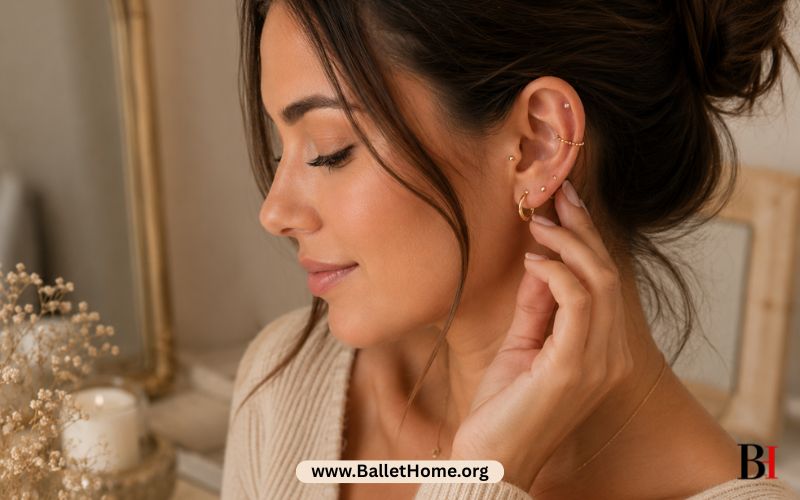
Choosing the best ear piercing jewelry is really about matching three things together, the placement, the material, and the healing stage your piercing is currently in. Start every new piercing with implant grade titanium or high karat gold, choose flat back styles over hoops while healing, and resist the urge to switch jewelry early no matter how ready it looks. Once your piercing is fully healed, the real fun begins, since that is when you can start building the curated ear stack you have been planning all along.